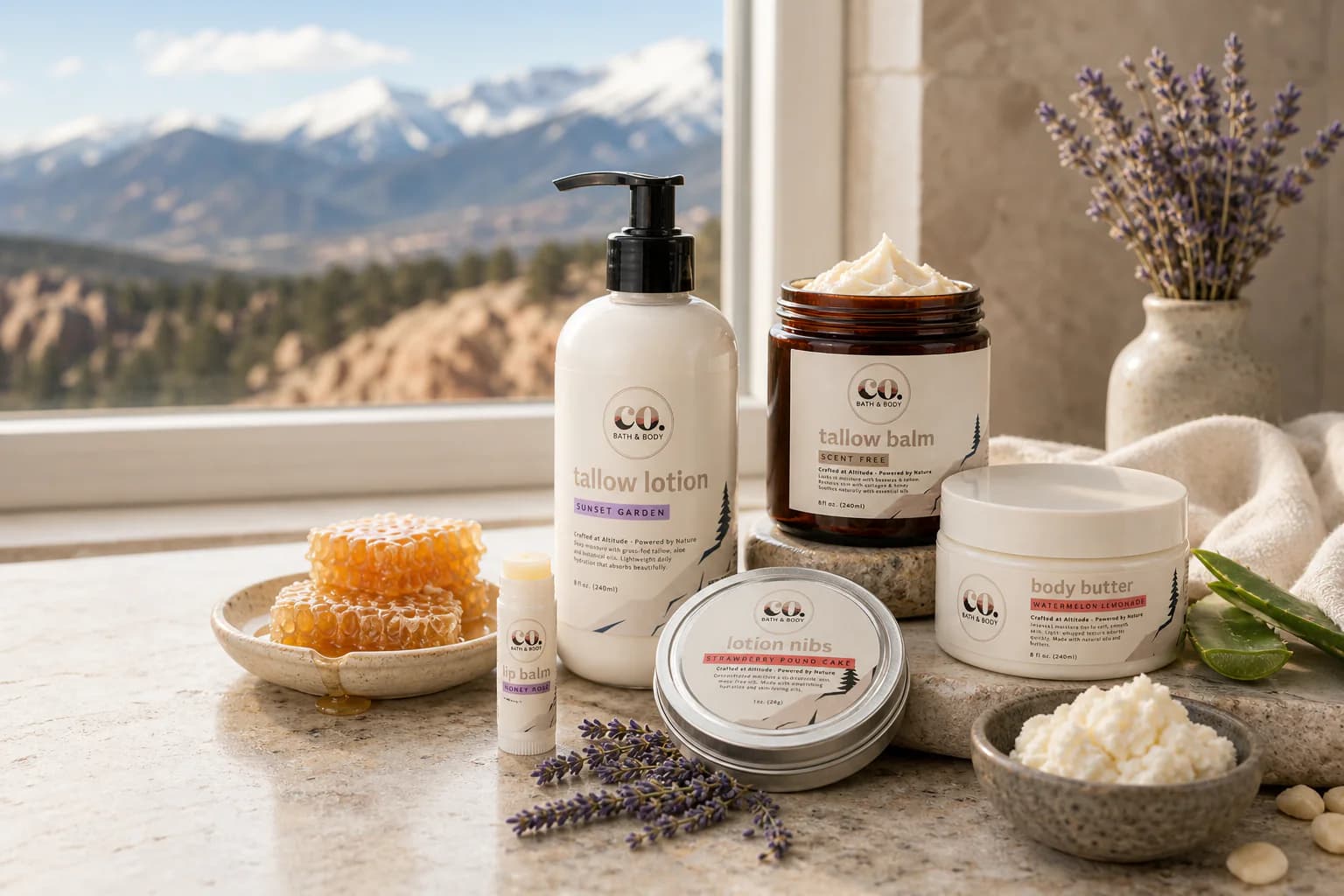
If your main problem is tight, rough, flaky, or weather-worn skin, start here. This routine guide focuses on the dry-skin decisions Colorado shoppers make most often: what to use after a shower, what to keep near the sink, what belongs in a bag, and when to reach for something richer. For the broader overview of tallow, bath products, soap, lip care, ingredients, gifts, and wholesale, read the Colorado Natural Body Care Guide.
Colorado dry skin needs a different kind of body care routine. Low humidity, higher elevation, wind, strong sun, cold mornings, and indoor heat all make moisture leave the skin faster than it would in a softer climate.
That is why choosing natural body care in Colorado should start with climate, texture, and routine fit, not just a clean-looking label. A lotion that feels perfect in a humid state can disappear too quickly here. A balm that seems heavy in July can become the product your hands need by October.
This supporting guide explains what Colorado weather does to dry skin, how to choose between lotion, balm, body butter, and solid moisturizers, which ingredients matter most, and how to build a simple head-to-toe routine that works across seasons.
Quick Answer: What Should You Use For Dry Skin In Colorado?
Most people in Colorado do best with a layered routine: a daily lotion for broad moisture, a richer balm or body butter for dry spots and nighttime use, a gentle cleanser that does not strip the skin barrier, and portable lip and hand care for wind, sun, and dry office air.
- Use lotion after showers and during the day when you need fast, spreadable moisture.
- Use balm on cracked knuckles, elbows, cuticles, heels, and wind-exposed areas.
- Use body butter when lotion is not enough, especially at night or after bathing.
- Use solid moisturizers and lip balm for commuting, hiking, work bags, and desk drawers.
- Choose short, functional ingredient lists with tallow, shea butter, beeswax, honey, glycerin, jojoba, rosehip, or sweet almond oil when they fit your skin.
What Colorado Climate Does To Skin
Colorado's geography creates a combination of stressors that most general skincare advice does not fully account for. Altitude, aridity, UV intensity, wind, indoor heat, and quick temperature swings can all affect the skin barrier in different ways.
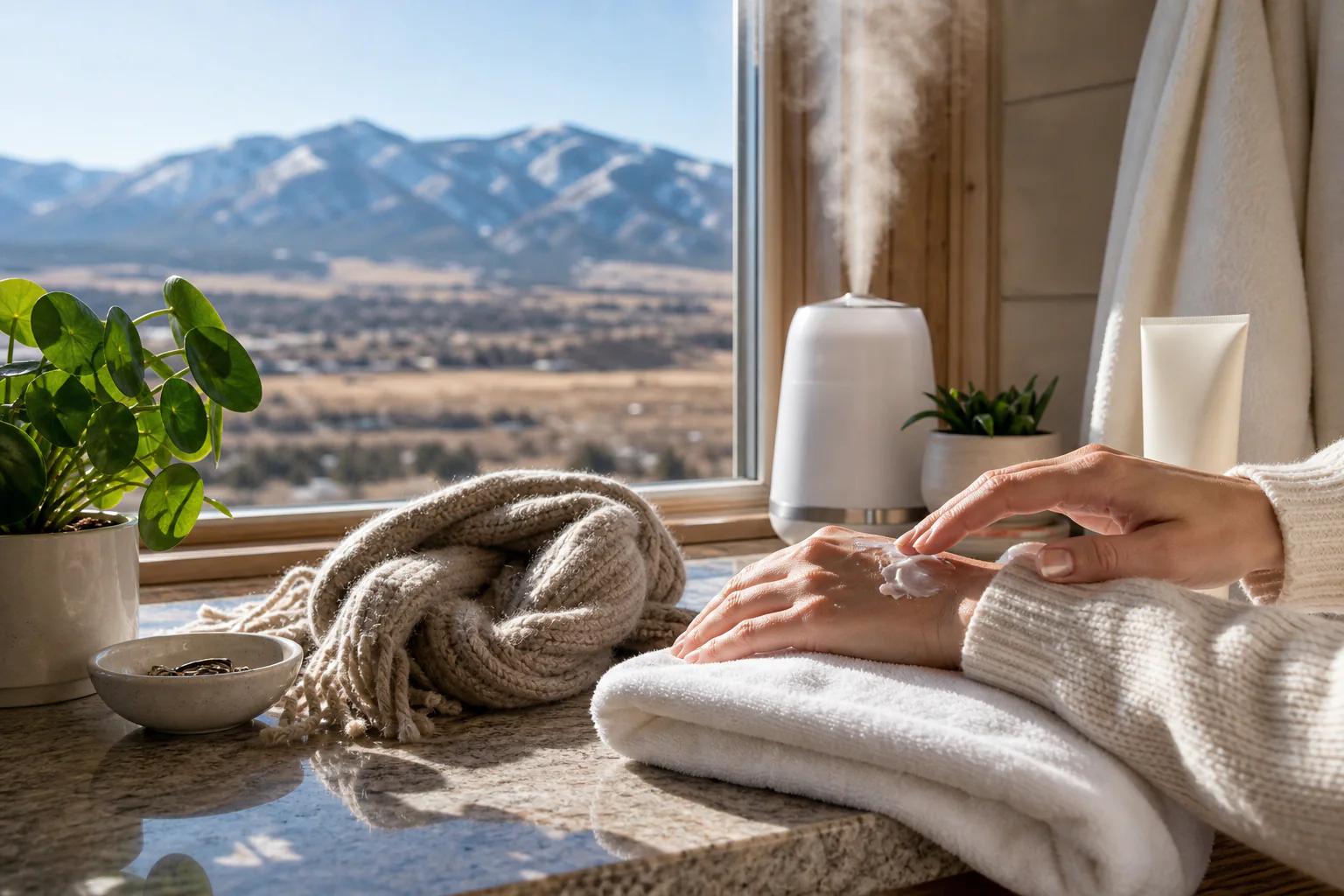
Why Dry Air And Altitude Change Moisture Needs
At elevation, the air is usually drier. When the surrounding air holds less water vapor, your skin loses moisture to the environment more easily. This process is commonly called transepidermal water loss, and it can happen before the skin looks obviously dry.
By the time your skin feels tight, flaky, or rough, it has often been depleted for a while. That is why Colorado routines need ingredients and textures that help support the skin barrier instead of only adding a temporary watery feel.
How Wind, Sun, And Cold Seasons Affect Sensitive Skin
Colorado wind strips surface oils faster than temperature alone would. Sun also matters more at altitude, even in winter, because UV exposure can be stronger and snow can reflect light back onto exposed skin.
Cold outdoor air followed by warm indoor heat creates a second problem: the skin moves from one drying environment to another. People with sensitive skin often notice this as tightness, redness, stinging, or a rough texture that returns quickly after applying a light moisturizer.
For more winter-specific routine ideas, pair this article with our winter skincare routine guide and the broader Colorado natural body care guide.
Why Texture Matters More Than Trends
In Colorado conditions, the texture and staying power of a product matter more than trend language. A lightweight lotion may be natural and still leave elbows rough by February. A richer balm or body butter may feel unnecessary in a humid climate but make complete sense here.
Texture-first thinking means matching the product to the level of dryness, the body area, and the season. The goal is not to use the richest product everywhere. The goal is to use the right weight in the right place.
How To Choose The Right Moisture Type
Not every moisturizer has the same job. In Colorado, using one product for every situation often leads to over-applying light lotion or under-treating the areas that need more barrier support.
When Lotion Works Best For Daily Use
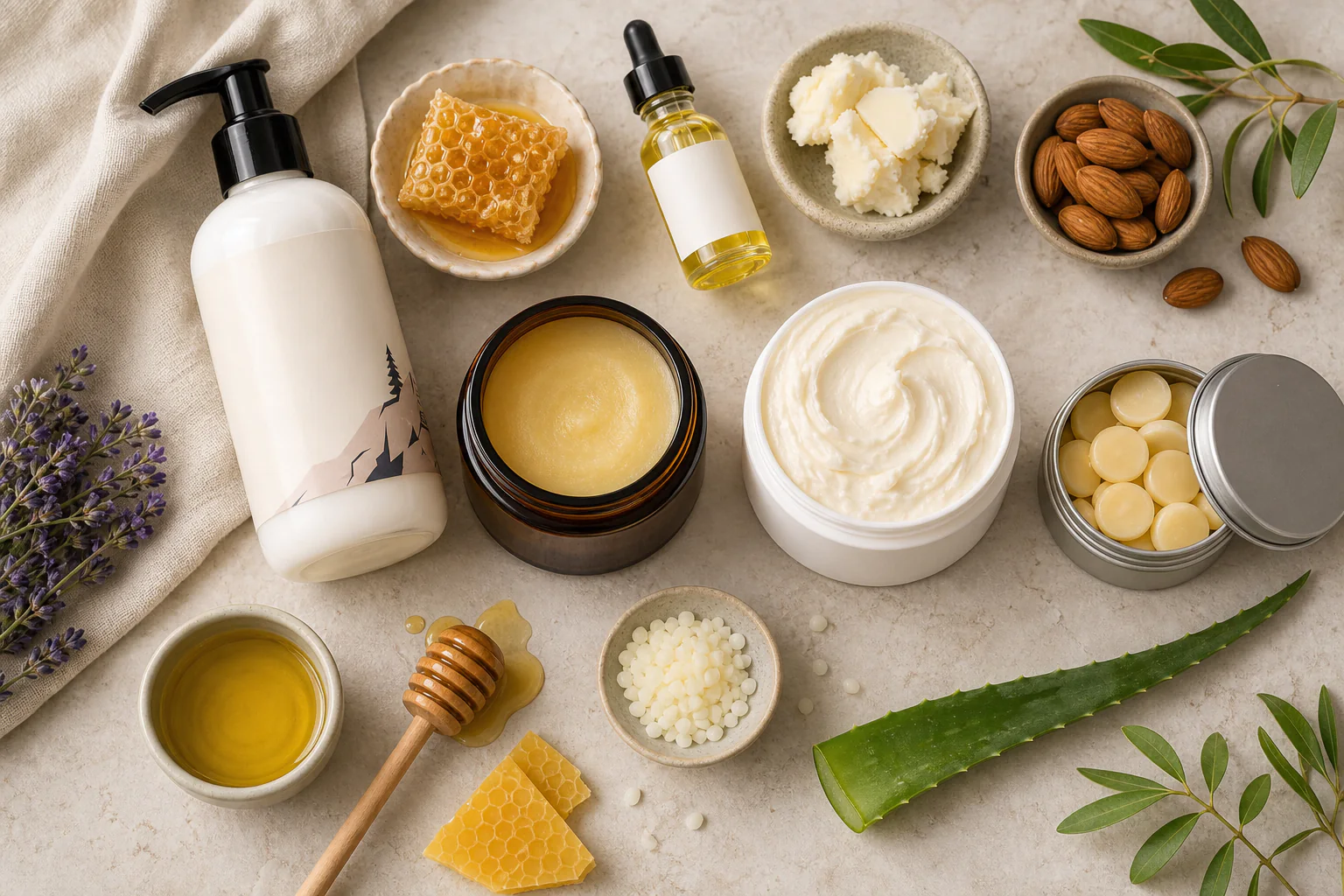
Lotion is still the most versatile format. It absorbs quickly, spreads across larger areas, and fits easily into a morning routine or a post-shower routine. If your skin is moderately dry rather than severely dry, a good lotion can handle most days.
In Colorado, look for lotions that combine humectants, emollients, and barrier-supporting ingredients. Humectants help attract water, emollients soften, and richer lipids help the skin feel comfortable longer.
When Balm Makes More Sense For Rough Spots
Balm is thicker and more occlusive. It is designed for concentrated application on specific areas: dry elbows, cracked knuckles, rough heels, cuticles, and wind-exposed skin. If lotion absorbs before it has time to soften a rough patch, balm is usually the better format.
Most people do not need balm everywhere. They need it where the barrier is clearly struggling.
Why Body Butter Fits Post-Shower Dryness
Body butter sits between lotion and balm. It is richer than a typical lotion but easier to spread across larger areas than a dense balm. Used while skin is still slightly damp after a shower, body butter can make the skin feel softer for longer.
For Colorado winters, body butter often works best as an evening step. Apply it to legs, arms, elbows, feet, or any area that feels tight by the end of the day.
Where Solid Moisturizers Fit Into Busy Routines
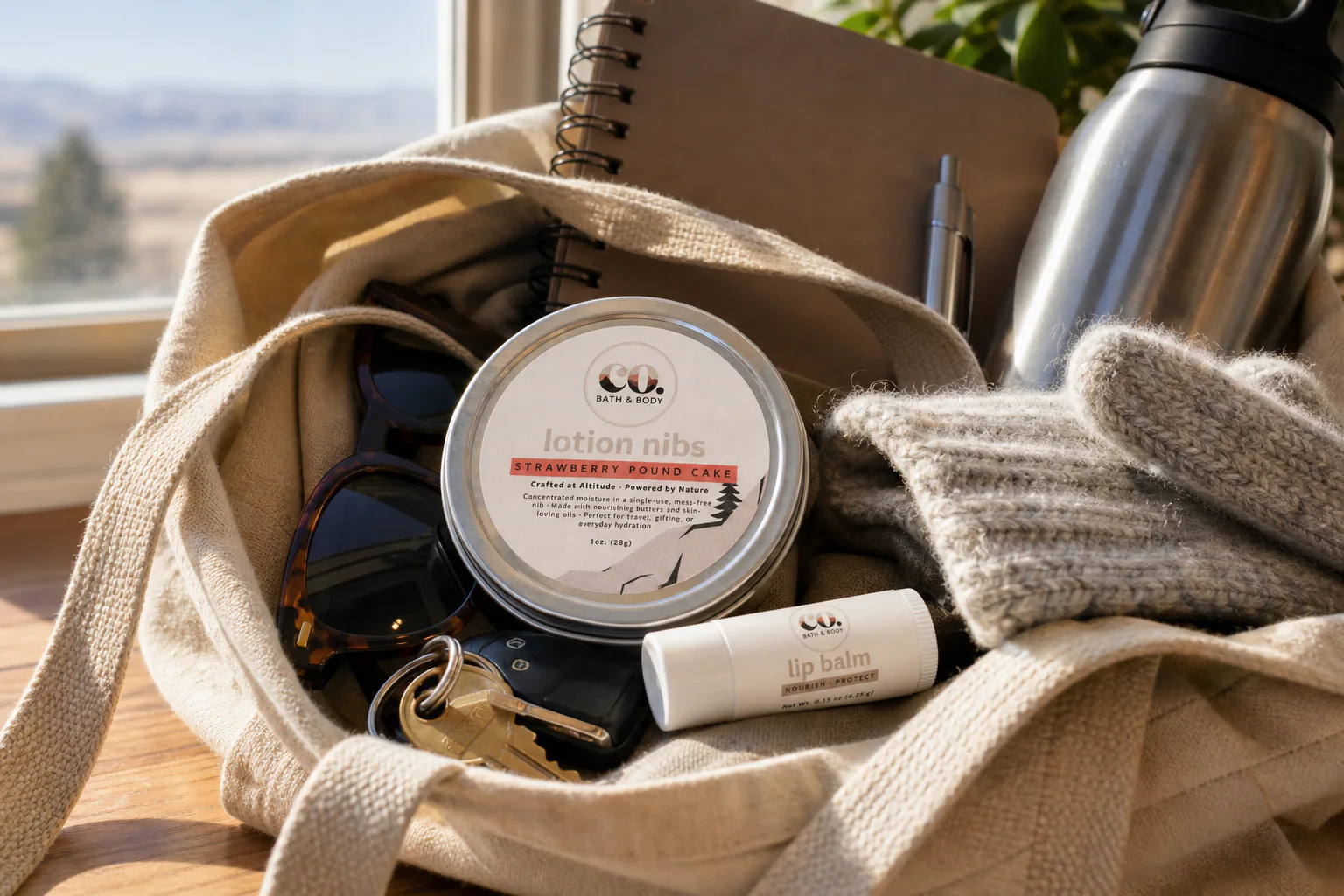
Solid moisturizers, sometimes called lotion bars, lotion nibs, or travel moisturizers, are easy to underestimate. They do not leak, they fit in a pocket or bag, and they give hands, knuckles, and cuticles quick moisture between fuller routine steps.
For anyone who works at a desk, commutes, hikes, skis, or spends time in dry office air, a solid moisturizer fills the gap between morning and evening care.
Ingredients Worth Looking For In Natural Formulas
The word natural is not enough by itself. A better question is whether the formula includes ingredients that actually support dry, sensitive, high-altitude skin.
If you want deeper ingredient detail, pair this guide with our notes on shea butter for hydrated skin, hemp seed oil in skincare, and Colorado skincare ingredients.
How Tallow Supports A Richer Protective Finish
Grass-fed tallow is a rich lipid ingredient that can give formulas a cushioned, protective finish. It is especially useful in products designed for dry hands, heels, elbows, and winter skin because it brings staying power that lightweight lotions often lack.
Tallow is not the only useful ingredient in a dry-skin formula, and it is not the right fit for every shopper. But for people whose skin stays dry no matter what they apply, a tallow-forward product is worth considering.
What Shea Butter, Beeswax, And Honey Contribute
Shea butter helps soften and cushion. Beeswax helps create a breathable moisture-sealing layer. Honey is a humectant, which means it helps draw moisture toward the skin rather than only coating the surface.
Together, these ingredients cover three useful jobs: softening, sealing, and moisture attraction. That is why they appear so often in natural body care formulas for dry climates.
Why Botanical Oils And Vitamins Matter For Skin Feel
Jojoba, rosehip, sweet almond, sunflower, and apricot kernel oils each change the way a formula spreads and finishes. Jojoba can feel clean and skin-compatible. Rosehip brings a richer fatty-acid profile. Sweet almond and apricot kernel oil soften texture and help a formula glide.
Vitamin E is often used to support the oil phase of a formula and improve the skin feel. In a dry climate, these details matter because a product has to feel good enough that you will actually use it consistently.
What Many Shoppers Prefer To Leave Out
Many shoppers with sensitive skin prefer to avoid synthetic fragrance, parabens, phthalates, sulfates, mineral oil, petroleum, and artificial dyes. For reactive skin, fragrance load is often the biggest variable.
If you are prone to sensitivity, start with unscented or lower-scent options and introduce one new product at a time. Shorter ingredient lists are easier to evaluate when your skin reacts.
Building A Simple Head-To-Toe Routine
A strong Colorado body care routine does not need to be complicated. It needs to be consistent and matched to where dryness shows up first.
Body Wash, Scrubs, And Bath Products Without Overdoing It
Start with cleansing. A body wash or soap that strips the skin barrier makes moisturizer work harder. Choose gentle cleansing and avoid turning every shower into an aggressive exfoliation step.
Scrubs and bath salts can be useful one or two times per week, especially when skin feels dull or rough. Bath bombs and bath soaks are more sensory, but they can still fit a practical routine when they help you slow down and moisturize afterward. For related product guidance, see our bath salts collection and bath bombs collection.
Hand Care, Cuticles, Elbows, And Heels
Hands, cuticles, elbows, and heels are usually the first places Colorado dryness shows up. Apply lotion after washing hands, then use balm or a solid moisturizer where cracking or roughness appears.
At night, apply a richer product to elbows and heels so it has time to soften the area without being washed away or rubbed off immediately.
Lip Care And Everyday Comfort On The Go
Lips are vulnerable at altitude because they do not produce oil the same way other skin areas do. Beeswax, shea butter, sunflower oil, and vitamin E are useful ingredients in a lip balm built for dry air and wind.
For a focused supporting article, read our guide to the best chapstick for Colorado dry climates.
How To Adjust Your Routine By Season
Colorado skin care should change with the season without becoming complicated. Keep the structure steady and adjust the product weight.
Spring
Spring brings wind, fast temperature swings, and more outdoor time. Keep lotion in the routine, use lip balm often, and watch for scent sensitivity if your skin feels reactive.
Summer
Summer sweat can make skin seem less dry than it is. Keep moisturizing after showers, and remember that altitude sun still affects exposed skin. Lightweight lotion usually fits better than heavy balm for broad daytime use.
Fall
Fall is the time to add richer textures before skin gets depleted. Introduce balm for hands and body butter for post-shower care as nights get colder.
Winter
Winter usually calls for the most support: gentle cleansing, lotion after bathing, body butter or balm at night, and portable care for lips and hands. Indoor heat is part of the problem, so do not wait until skin is visibly cracked to adjust.
Scents, Gifts, And Everyday Shopping Considerations
Scent preference, giftability, and shipping matter because they affect whether a product becomes part of real life. The best formula is not useful if the scent is wrong, the format is inconvenient, or the product arrives too late for the occasion.
How To Pick Between Unscented And Colorado-Inspired Scents
Unscented is the safest first choice for reactive, allergy-prone, or very sensitive skin. If your skin tolerates scent well, choose a scent family before choosing a specific scent: fresh, woodsy, floral, warm, citrus, or seasonal.
Colorado-inspired scent naming can make shopping more enjoyable, but the formula still matters first. Scent should support the product, not make up for weak moisture performance.
What Makes A Good Giftable Body Care Set
Good body care gifts are self-explanatory. Bath salts, bath bombs, lip balm, soap, and solid moisturizers are easy to gift because the recipient does not need to know their exact moisturizer preference.
Moisturizer gifts work best when they are bundled by use case: dry hands, bath night, travel care, winter skin, or a full daily routine.
What To Check Before Ordering
Before buying online, check shipping timing, free-shipping thresholds, return or satisfaction policies, and whether the brand is clear about ingredients. Made-to-order body care can be fresher, but it may need a little more lead time.
Where To Shop Thoughtfully In Colorado
Colorado has a strong community of independent body care makers. The difference between a small-batch product and a mass-market product is often visible in ingredient clarity, texture, freshness, and the ability to ask real questions.
What To Look For In Small-Batch Online Brands
Look for clear ingredient lists, practical product descriptions, honest scent guidance, and product pages that explain who each format is for. Reordering should also be easy, because dry-skin routines only work when they are simple to maintain.
When A Colorado Springs Storefront Helps
For Colorado Springs shoppers, a storefront can help when you want to smell scents, compare textures, or ask about sensitive skin. Colorado Bath & Body blends and ships from Colorado Springs, and the local storefront gives shoppers a direct place to get guidance.
You can shop the broader collection through the Colorado Bath & Body shop, compare tallow formats on the tallow skin care guide, read the tallow balm vs tallow lotion comparison, or start with daily dry-skin support from tallow lotion.
Bottom Line
The best natural body care for Colorado dry skin is not one product. It is a small routine built around climate: gentle cleansing, daily lotion, richer spot treatment, body butter when the season calls for it, and portable care for lips and hands.
When you choose by texture, ingredient function, and real Colorado conditions, body care gets easier. You stop chasing trends and start giving your skin what this climate actually asks for. For the full product-by-product overview, go back to the Colorado natural body care guide.
About the Author
Colorado Bath & Body
Colorado Bath & Body shares ingredient notes, routine guidance, and practical skincare education from our Colorado Springs studio.